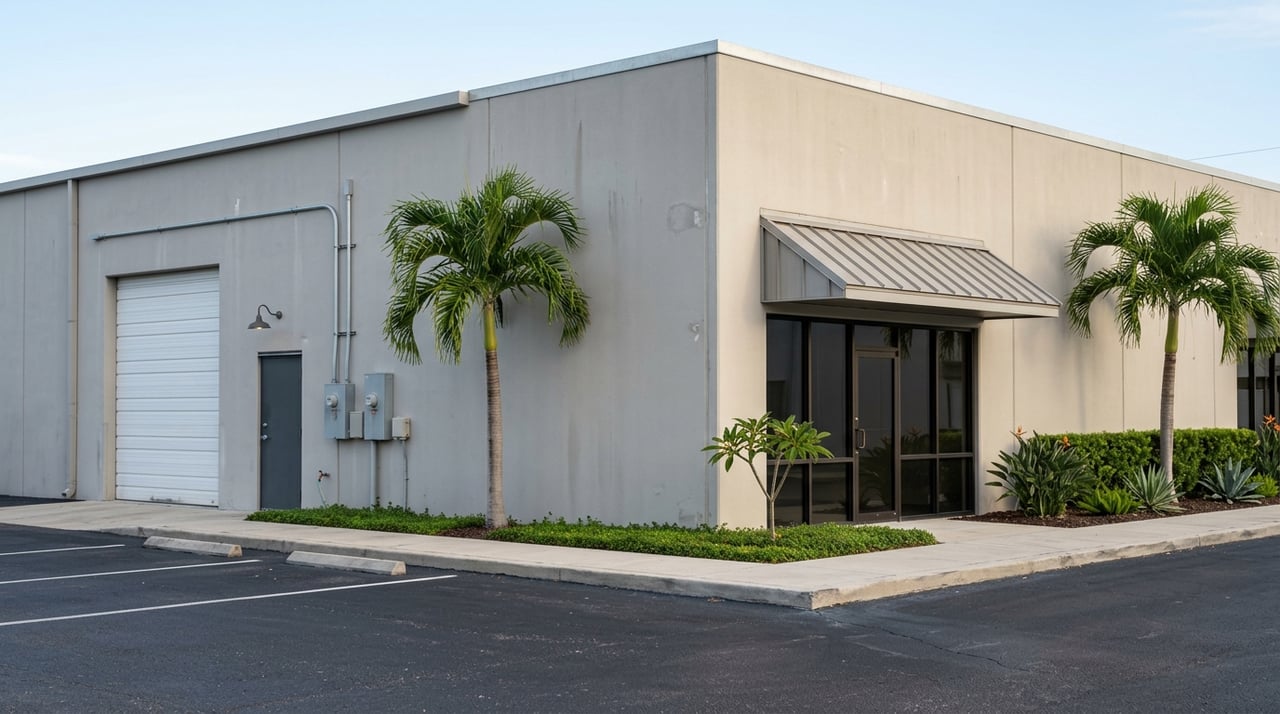
If you need industrial or flex space in central Tampa, Drew Park is hard to ignore. For many users, the appeal is not flashy new construction. It is fast access, practical building layouts, and an infill location next to one of the region’s most important transportation hubs. If you are weighing where to lease, buy, or invest, this guide will show you why Drew Park keeps making the shortlist. Let’s dive in.
Drew Park has a practical infill location
Drew Park is not a typical greenfield industrial park built around newer bulk warehouses. According to the City of Tampa’s Drew Park CRA plan, it is an airport-adjacent infill district with a long-established service-industrial character. The city notes that the area north of Martin Luther King, Jr. Boulevard is predominantly light industrial.
That context matters when you are comparing locations. Drew Park is made up of about 651 acres, 914 parcels, and 769 structures, with 61.2% of structures classified as commercial or industrial. Another 30.3% are residential, which helps explain why the area functions as a mixed service-industrial district instead of a single-purpose warehouse park.
For light industrial and flex users, that mix often creates a more workable environment for local operations. You are not just looking at one building in isolation. You are looking at how easily your business can serve customers, vendors, crews, and deliveries across Tampa.
Access is the biggest advantage
For most users, the main reason Drew Park works is simple: you can get in and out quickly. The CRA plan says Hillsborough Avenue and Dale Mabry Boulevard border the area and connect directly to I-275. Internal routes such as Lois Avenue, Westshore Boulevard, Tampa Bay Boulevard, Martin Luther King, Jr. Boulevard, and Osborne Avenue help move commercial traffic through the district.
That kind of road access supports many day-to-day business needs. If your operation depends on service calls, route density, fast supplier trips, or regular small-truck movement, centrality can matter more than being in a newer park farther out. Drew Park gives you a location that sits inside the urban core rather than outside it.
The airport is another major piece of the story. Tampa International Airport borders Drew Park on the west and south, and the airport says it is easy to reach from Highway 60, the Veterans Expressway, and I-275. The airport is also about five miles west of downtown Tampa, which adds to the district’s appeal for businesses that need to cover a broad part of the metro efficiently.
Airport adjacency supports logistics users
Being next to Tampa International Airport is more than a map feature. It gives Drew Park a strong operational edge for users tied to cargo, aviation support, and regional distribution. The CRA plan notes that Tampa International Airport provides air cargo access to eight counties, 4.2 million people, and the nation’s 19th largest GDP.
That does not mean Drew Park is a bulk logistics market filled with giant modern distribution centers. It means businesses that benefit from airport access can operate from smaller, more functional spaces nearby. That can be especially useful for companies handling parts, repairs, maintenance, specialty materials, and time-sensitive deliveries.
Public investment also reinforces this role. Tampa International Airport’s capital reporting includes projects tied to the Drew Park MRO cluster area, along with cargo expansion, cargo and ground support equipment rehabilitation, and road and signage improvements leading to the airport, as outlined in the TPA business plan.
The building stock fits small-bay users
Drew Park’s real strength is not shiny inventory. It is useful inventory. The CRA plan says many active business buildings were originally temporary World War II structures that have been expanded over time, often outside modern development standards.
That aging stock can be a drawback if you want a new bulk warehouse with highly standardized specs. But for many light industrial and flex users, it is exactly why the submarket works. Older buildings in infill locations often offer layouts, yards, and entry points that are better matched to hands-on operating businesses.
In practical terms, Drew Park tends to support smaller-bay and service-oriented occupancy. The current mix in the market points to office-warehouse suites, freestanding flex buildings, and warehouse properties with fenced outdoor storage, modest office components, and grade-level loading. That product profile is often a better fit for owner-users, small distributors, contractors, and specialty operators than a larger institutional warehouse format.
Drew Park works well for these users
Based on the city’s redevelopment plan, Drew Park has a strong foundation for uses such as fabrication and light assembly, auto and truck repair, and maintenance depots for private utility contractors. Near the airport expansion edge, the plan also identifies airport-related commercial, office, warehouse and distribution, and light industrial uses.
That makes the area a logical fit for businesses such as:
- Contractors who need central dispatch and equipment storage
- Fleet service operators with yard and parking needs
- Parts and material distributors serving the Tampa core
- Small manufacturers and fabricators
- Aviation-support vendors that value airport proximity
- Service businesses that need a mix of warehouse and office space
If your business depends on quick trips across Tampa, easy airport access, and practical space rather than image-driven space, Drew Park can check a lot of boxes.
Flex users benefit from the market profile
The broader Tampa industrial market data also helps explain why Drew Park remains relevant. Newmark’s Q4 2025 Tampa industrial report shows the Westshore/Airport submarket at 15.7 million square feet of inventory with 5.2% vacancy, 122,754 square feet of year-to-date absorption, and no space under construction.
That is a notable setup if you are searching for well-located industrial or flex space. A relatively tight vacancy rate and no construction pipeline can make existing space more important, especially for users who need to be in this part of Tampa rather than somewhere farther from the urban core.
The same report shows asking rents of $9.69 per square foot for warehouse and distribution, $15.36 per square foot for R&D and flex, and $10.11 per square foot overall in the Westshore/Airport submarket. By comparison, the overall Tampa market ended 2025 at 8.7% vacancy and $9.15 per square foot total asking rent.
Newmark also notes that Tampa continues to be supported by steady demand for spaces under 100,000 square feet, while larger buildings have materially higher vacancy. That trend lines up well with Drew Park’s small-bay, function-first identity.
Investors like the same traits users do
For investors, Drew Park can stand out for many of the same reasons tenants and owner-occupiers like it. The submarket combines central location, airport adjacency, long-standing industrial utility, and a building stock that serves smaller users. In a market where smaller industrial spaces continue to see demand, that can create a compelling value proposition.
The city also describes Drew Park as one of the few remaining Tampa areas with affordable industrial land and space. Infill industrial districts with that kind of positioning often attract attention because replacement costs and land constraints make similar locations hard to replicate.
That said, a good Drew Park acquisition usually requires careful underwriting. In this submarket, value is often tied less to cosmetic finishes and more to site function, access, tenant fit, and adaptability over time.
What to evaluate before you lease or buy
Because Drew Park is an older infill district, due diligence matters. The CRA plan points to an irregular street pattern, some residential adjacency, and land-use conflicts that can create buffering and stormwater issues.
If you are evaluating a property here, focus on the features that affect real operations:
- Access to major arterials and I-275
- Proximity to Tampa International Airport
- Grade-level loading and truck circulation
- Fenced yard or outdoor storage potential
- Parking for staff, fleet, or customers
- Office-to-warehouse ratio
- Ceiling height and usable clear space
- Power capacity for your operation
- Site layout and redevelopment flexibility
- Compatibility with surrounding uses
This is a submarket where headline square footage does not tell the full story. A smaller building with the right yard, loading, and access can outperform a larger space that creates daily operating friction.
Why Drew Park stays on the shortlist
Drew Park works for light industrial and flex users because it solves practical business problems. It offers central Tampa access, direct arterial connections, airport adjacency, and a building mix that often suits smaller, hands-on operations better than a large modern warehouse park would.
It is not the right fit for every user. If you need brand-new construction, uniform site planning, or large-scale bulk distribution space, you may find better options elsewhere. But if you value location, functionality, and flexibility, Drew Park deserves serious consideration.
If you are comparing industrial or flex options in Tampa, working with an advisor who understands both the numbers and the block-by-block tradeoffs can save you time and costly mistakes. To explore acquisitions, site selection, lease negotiations, or disposition strategy in this submarket, connect with Alan J. Kronenberg.
FAQs
What makes Drew Park attractive for light industrial users in Tampa?
- Drew Park offers central access, direct connections to major roads, adjacency to Tampa International Airport, and a building stock that often fits small-bay and service-industrial operations.
Why is Drew Park a good fit for flex space users?
- Drew Park supports many office-warehouse and small-bay configurations, which can work well for businesses that need a blend of office area, storage, light industrial space, and operational flexibility.
How close is Drew Park to Tampa International Airport?
- Drew Park borders Tampa International Airport on its western and southern edge, giving many users fast access to airport-related routes and services.
What types of businesses tend to fit Drew Park properties?
- Businesses such as contractors, fleet-service operators, parts distributors, small manufacturers, fabricators, and aviation-support vendors often match the area’s location and building profile.
What should you look at before leasing or buying in Drew Park?
- You should closely review access, loading, yard layout, parking, office-to-warehouse balance, power, ceiling height, stormwater considerations, and how the site functions for your specific operation.