Thinking about opening a restaurant or café in South Tampa? It is an exciting market, but it can also be expensive to get wrong. If you are choosing between a second-generation restaurant space, a café shell, or a high-visibility storefront, the details behind the address matter just as much as the concept. This guide walks you through what to look for in South Tampa so you can evaluate sites more confidently before you sign a lease. Let’s dive in.
Why South Tampa Draws Restaurant Concepts
South Tampa benefits from a large surrounding customer base. The City of Tampa had an estimated 414,547 residents in 2024, and Hillsborough County reached 1,581,426. That means your customer base is not limited to one block or one neighborhood pocket.
For restaurant and café operators, South Tampa is best understood as a group of dining nodes rather than a single corridor. Official city materials point to South Howard, Hyde Park Village, and the Palma Ceia, Bay to Bay, and MacDill area as key commercial areas with food-and-beverage activity. Each one offers a different mix of visibility, access, parking conditions, and operating tradeoffs.
Key South Tampa Dining Corridors
South Howard and SoHo
South Howard is one of the most established dining and nightlife corridors in Tampa. City planning materials describe it as a traffic collector and truck route with turning movements, parking demand, and significant pedestrian activity.
That combination can create strong exposure for the right concept, but it also means access and circulation deserve close review. A highly visible location may still create operational headaches if customers struggle with parking, entry, or pickup flow.
Hyde Park Village
Hyde Park Village offers a dense tenant mix that includes restaurants, coffee concepts, and retail uses. Its directory includes names such as bartaco, Buddy Brew Coffee, Forbici, Meat Market, On Swann, sweetgreen, The Salty, The Hyppo, and Timpano.
This type of environment can work well for concepts that benefit from steady foot traffic and complementary neighbors. If your business depends on lunch, dinner, grab-and-go, or all-day activity, co-tenancy can be a major advantage.
Palma Ceia, Bay to Bay, and MacDill
Palma Ceia is described by the City as a mixed-use commercial district with restaurants, coffee houses, bars, specialty shops, and office uses. It has a neighborhood commercial feel, but parking friction is a known issue along parts of the corridor.
City planning documents note that much of the area lacks on-street parking, which pushes customers to on-site lots, side streets, and limited spaces along MacDill Avenue. That makes shared parking, site layout, and parcel efficiency especially important when you compare locations.
What to Check Before You Sign a Lease
Start with zoning and use permission
Before you get excited about a location, confirm that your intended use is allowed. This should be your first filter, not your last.
A space may look perfect on paper, but if the use approval, signage standards, parking rules, or site constraints do not line up with your concept, you can lose time and money quickly. In Tampa, zoning and site-planning standards affect much more than just whether a restaurant is technically allowed.
Verify kitchen infrastructure early
If your concept uses a true cookline, kitchen readiness should be one of your biggest priorities. Tampa's commercial final inspection checklist requires the hood to be installed and connected to the duct, grease filters and fans or blowers to be in place, and the fire suppression system installed.
The same city checklist also requires plumbing fixtures to be connected to water and sewer, and commercial site utilities to pass final testing. In practical terms, that means a second-generation restaurant space can be far easier and less expensive to open than a raw retail shell.
Understand grease requirements
Grease management is not a small detail in Tampa. The City states that grease is the number one cause of sewer overflows and distinguishes between smaller indoor grease traps and larger underground grease interceptors located outside the facility.
Actual sizing must follow the Florida Building Code and a licensed plumber's design. If a site cannot reasonably support your grease needs, that issue can become a major cost driver during buildout.
Confirm utility capacity
A restaurant or café may need more from a building than a typical retail tenant. Water, sewer, electrical service, and natural gas capacity can affect everything from your menu to your opening timeline.
That is why it makes sense to ask detailed questions before lease execution. A space with existing infrastructure and workable roof or shaft access is usually easier to put into service than one that needs major upgrades.
Parking, Access, and Visibility Matter More Than Size
Many operators focus first on square footage and rent. In South Tampa, the more important question is often how easily customers can find you, reach you, and park.
The South Howard corridor study highlights turning movements, driveway conflicts, parking demand, and pedestrian activity. The City's Howard Avenue quick-build project also adds parallel parking and narrower lanes to support businesses and calm traffic, which shows how central access and parking are to corridor performance.
In Palma Ceia, city planning documents note that some lots operate under capacity while others fill up. That uneven pattern can make shared parking arrangements and site efficiency more valuable than simply leasing a larger space.
When you compare locations, pay attention to:
- Corner visibility
- Frontage along the street
- Ease of ingress and egress
- Parking on-site or nearby
- Compatibility with pickup and delivery flow
- Pedestrian activity near the storefront
A smaller, better-functioning site can outperform a larger one if the customer experience is easier.
Patio Potential Can Change the Numbers
For many South Tampa concepts, outdoor seating can improve both revenue potential and street presence. But patio use is not automatic.
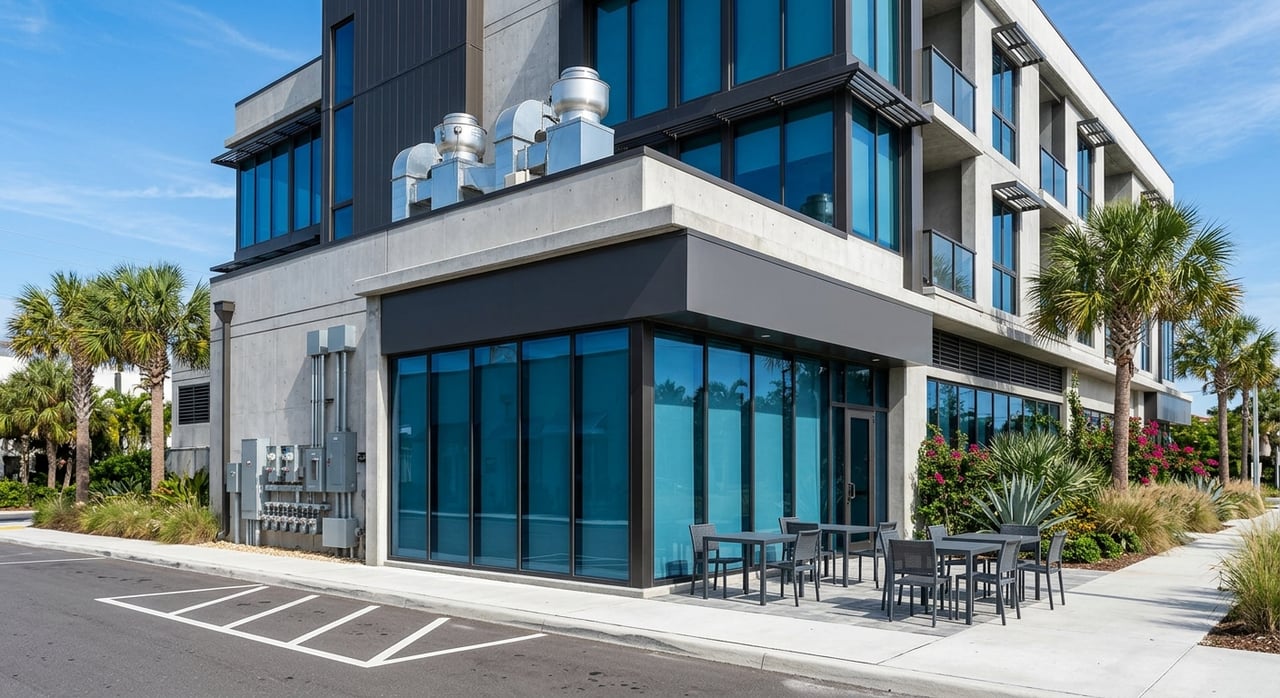
The City of Tampa's sidewalk café process requires a current paid City business tax receipt, a scaled site plan, insurance naming the City as certificate holder and additional insured, and a notarized hold-harmless agreement. The City also requires tables and chairs to be removed daily and during inclement weather, special events, and parades.
If your patio extends into the right of way as a street café, a separate right-of-way standard permit is required. The City notes that meter-space fees can also be added during the ROW process.
That means patio value should be underwritten early. A site with enough sidewalk width, usable frontage, and a realistic path to compliance may offer a meaningful advantage over an interior-only location.
Permits and Compliance to Plan For
Florida licensing rules
Florida requires owners of new public food service establishments, and new owners of existing establishments, to obtain a license before opening. The state also requires plan review for newly constructed, remodeled, converted, or reopened establishments after at least 18 months of closure.
These are not last-minute items. They should be part of your site review and opening schedule from the beginning.
Food manager certification
The Florida Department of Health states that food manager certification is required for most establishments, with some exceptions. It also notes that an establishment can fall out of compliance if a certified manager leaves and is not replaced within 30 days.
This is easy to treat as a staffing detail, but it can affect your launch timeline. It is worth building into your opening checklist early.
Tampa business tax receipt
At the city level, businesses in Tampa need a Business Tax Receipt. This is also important because patio-related applications require that receipt as part of the submittal package.
If your concept depends on outdoor seating, delays in this step can affect more than your paperwork. They can affect your operating model.
Right-of-way timing
The City states that its right-of-way permit review and approval process takes about 12 to 15 business days. Sidewalk café applications cannot be accepted until all required documents are submitted and verified.
Even when the timeline looks manageable, it still needs to be built into your opening calendar. A site that appears ready may still carry timing risk if outdoor seating is central to your concept.
A Practical Screening Order for South Tampa Sites
If you are narrowing down restaurant or café locations in South Tampa, a simple screening order can help you avoid expensive surprises.
- Confirm zoning and use permissions
- Verify hood, duct, grease, fire suppression, and utility capacity
- Test parking, access, and visibility
- Decide whether patio revenue is realistic enough to justify the permit and buildout effort
This order reflects the biggest sources of cost and delay identified in city requirements and corridor planning materials. It also helps you focus on items that are hard to fix after lease signing.
What Strong South Tampa Sites Often Have in Common
The best restaurant and café opportunities in South Tampa are not always the flashiest spaces. In many cases, the strongest sites already have workable kitchen infrastructure, can handle some parking friction, and benefit from nearby co-tenants, foot traffic, or patio potential.
That is especially true in established nodes like South Howard, Hyde Park Village, and Palma Ceia. A concept that fits the corridor, works with the site constraints, and opens with fewer infrastructure surprises usually has a better chance of starting strong.
If you are evaluating multiple spaces, it helps to look past the asking rent and focus on total occupancy strategy. The right location is the one that supports your concept operationally, financially, and logistically.
If you want help evaluating restaurant or café sites in South Tampa, negotiating lease terms, or screening locations before you commit, Alan J. Kronenberg can help you approach the process with local insight and a clear strategy.
FAQs
What should you check first before leasing a restaurant space in South Tampa?
- Start by confirming zoning and use permissions, then review kitchen infrastructure, utilities, parking, access, and patio feasibility.
Why is second-generation restaurant space valuable in South Tampa?
- A second-generation space may already have hood, duct, grease, fire suppression, and utility improvements in place, which can reduce cost and save time.
Do South Tampa restaurant sites always have easy parking?
- No. City planning documents for South Howard and Palma Ceia show that parking demand and access challenges are common and should be evaluated carefully.
Can you add outdoor seating to any café or restaurant in Tampa?
- No. Outdoor seating requires compliance with City rules, and some setups also require a separate right-of-way permit and possible meter-space fees.
What permits or licenses do you need to open a restaurant in Tampa?
- At a minimum, operators should plan for Florida food service licensing requirements and a City of Tampa Business Tax Receipt, along with any applicable plan review or right-of-way approvals.
How long can Tampa right-of-way approval take for a restaurant patio?
- The City says right-of-way permit review and approval takes about 12 to 15 business days once a complete application is submitted.