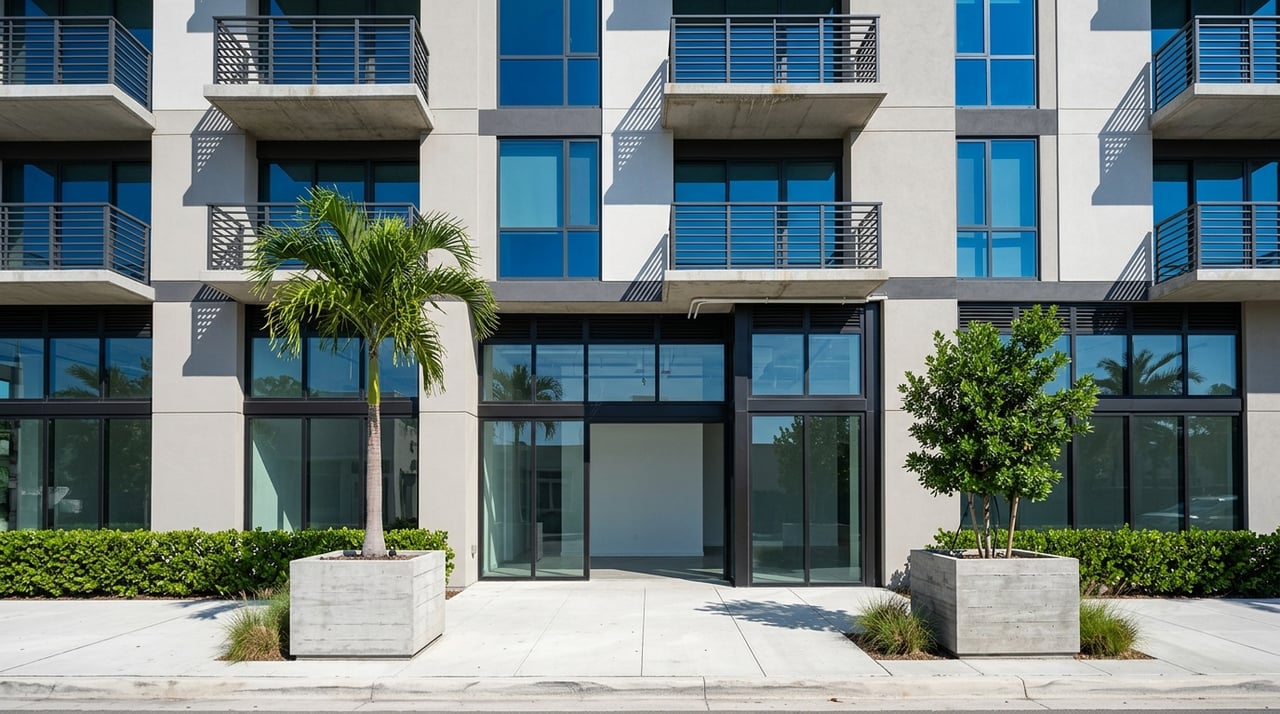
If you are scouting Tampa for a boutique fitness studio, the Channel District is hard to ignore. It has the kind of urban energy many wellness brands want, but not every popular neighborhood is the right operational fit. The real question is whether the area supports your concept, your space needs, and your customer base. Let’s break down what the Channel District offers and where you should be cautious.
Why the Channel District stands out
The Channel District has evolved well beyond its warehouse roots. The City of Tampa describes it as a growing residential, arts, and entertainment district, and the city’s 2024 amended CRA plan shows a compact area of about 200 acres with a land-use mix led by high-density residential. It also has very little vacant land at 1.4%, which tells you this is largely a built-out urban neighborhood rather than a blank-slate expansion market.
For a boutique fitness business, that matters because built-out districts often perform best when your model benefits from visibility, convenience, and repeat foot traffic. Instead of depending mainly on destination driving trips, you are looking at a neighborhood where residents, workers, and visitors can encounter your studio as part of daily life.
Channel District demographics favor boutique concepts
One of the strongest arguments for the Channel District is its resident profile. The CRA plan estimates a 2021 population of 4,661 with about 3,010 households, an average household size of 1.55, a median age of 31.8, and median household income of $92,672. About 89.6% of residents are in the workforce-age range.
That profile lines up well with many boutique wellness models. Younger professionals in smaller households often value convenience, structured classes, and premium health experiences that fit into a busy workweek.
The educational profile is also notable. Roughly 73% of residents age 25 and older hold a bachelor’s, graduate, or professional degree, according to the CRA plan. While education alone does not determine demand, it often overlaps with consumer comfort around subscription services, wellness spending, and specialized fitness formats.
Best-fit fitness concepts here
Based on the neighborhood’s demographics, walkability, and mixed-use character, the Channel District appears especially well suited to class-based, premium-priced fitness concepts. That includes:
- Pilates studios
- Yoga studios
- Barre concepts
- Recovery and wellness studios
- Small-group strength or conditioning studios
These models tend to work well when your clients can stop in before work, at lunch, after work, or on weekends without a major commute. They also tend to benefit from strong storefront branding and a polished customer experience, both of which fit the Channel District environment.
Walkability supports repeat visits
Walkability is one of the neighborhood’s biggest advantages. Walk Score ranks the Channel District at 78 and identifies it as one of Tampa’s most walkable neighborhoods. Nearby Water Street Tampa, which connects into the broader downtown waterfront network, advertises a Walk Score of 92.
For your studio, strong walkability can support more frequent attendance. Clients are more likely to book regular classes when getting there feels easy, especially in an urban setting where convenience often drives retention.
Walkability can also reduce your dependence on large parking fields. That is helpful in a compact district where space is valuable and not every fitness concept can rely on suburban-style access patterns.
Daytime demand is not just residential
The Channel District is not only a place where people live. The 2024 CRA plan cites 2,586 jobs in 2021 and about 257,448 square feet of office development in the district. That creates another layer of potential demand beyond local residents.
Nearby employment hubs add to that story. Adjacent Water Street Tampa reports two million square feet of office space, and Sparkman Wharf adds roughly 180,000 square feet of loft-style office space. In practical terms, that means your potential customer base may include residents, office workers, and nearby visitors throughout the day.
This type of mix can help support a more flexible class schedule. Early morning classes may appeal to residents, midday sessions can capture office users, and evening classes can draw both locals and nearby workers heading home.
Destination traffic adds exposure
The Channel District also benefits from being near major destinations. AMALIE Arena hosts more than 150 events per year at 401 Channelside Drive. The Tampa Convention Center offers 600,000 square feet of event space with capacity for up to 17,000 guests, while the Florida Aquarium has welcomed more than one million guests annually in recent years. Port Tampa Bay also reports more than 1.5 million cruise passengers per year.
That kind of traffic does not automatically create long-term memberships. Still, it can raise your exposure and support business lines such as drop-in classes, short-term packages, and partnerships tied to nearby hotels or offices.
It also reinforces something important about the Channel District. This is not a quiet, isolated pocket of Tampa. It functions as part of a larger destination ecosystem with activity that can support a premium, visible retail concept.
Zoning and storefront visibility matter
From a planning perspective, the Channel District is built for mixed-use activity. City zoning materials describe it as a growing mixed-use area between the Central Business District and Ybor City, and the CRA plan states that residential, commercial, and industrial uses are currently allowed.
There is also a pedestrian-oriented design framework that can work in your favor. City code emphasizes active street frontage, with street-facing portions expected to contribute to the pedestrian character through office or commercial uses for at least the first 25 feet of depth.
For a boutique studio, that can be a real advantage. A space with visible windows, a welcoming reception area, and a branded storefront can help you capture walk-by interest and reinforce a polished brand identity.
What size space makes sense?
The local market examples suggest that smaller urban footprints can work well for boutique fitness. One current Channel District office and retail listing shows space from 2,773 to 3,856 square feet with an open floor plan, high ceilings, storefront windows, and flexibility for boutique fitness use. Another Channelside commercial site advertises ceiling heights from 10 to 24 feet.
Taken together, local examples point to a practical sweet spot of roughly 2,500 to 5,000 square feet for many boutique concepts. That range can give you enough room for reception, one or two studios, storage, locker areas, and recovery space without taking on the overhead of a much larger full-service gym.
Larger concepts can work too, but they are more selective. Crunch Fitness opened a 21,400-square-foot ground-floor club in the district at Grand Central at Kennedy, which shows that large-format fitness is possible when the right footprint exists. Still, most boutique operators will likely find better alignment in a smaller, efficient shell.
Sound control is a serious site issue
If there is one operational issue you should evaluate early, it is sound. The City of Tampa uses different noise enforcement standards by geography, and the 2023 Florida Building Code requires certain wall and floor-ceiling assemblies between dwelling or sleeping units and public or service areas to meet minimum sound transmission standards.
In a mixed-use district like the Channel District, that matters a lot. If your studio sits below apartments, near hotel rooms, or beside other sensitive uses, music volume, impact training, and dropped weights can become design and cost issues very quickly.
This does not mean the neighborhood is a poor fit. It means you should underwrite acoustic treatment from the start if your concept includes louder music, high-impact movement, or free-weight activity. In many cases, vibration isolation, acoustic insulation, and careful mechanical coordination may be part of the deal.
When the Channel District is a strong fit
The Channel District looks strongest for a boutique fitness brand when your concept checks several of these boxes:
- Premium or specialized class-based model
- Strong appeal to young professionals
- Space needs around 2,500 to 5,000 square feet
- Value placed on visibility and pedestrian traffic
- Ability to operate well in a mixed-use urban setting
- Moderate sound profile or budget for acoustic mitigation
If that sounds like your business, the neighborhood offers a compelling blend of resident density, office spillover, and destination exposure.
When you should think twice
The fit is weaker if your model depends on features more common in suburban sites. You may want to be more cautious if your concept needs:
- Large surface parking fields
- Very large floor plates
- Heavy-volume music with minimal buildout control
- Repeated high-impact training without major sound insulation
- A low-cost, high-volume membership model that depends on scale
In those cases, the Channel District may still work, but your site selection criteria will need to be much tighter.
How to evaluate a potential location
Before you commit to a space, focus on the practical questions that affect performance and buildout cost.
Check the customer mix
Look at who you want to serve and when they will visit. In the Channel District, your demand may come from residents, office users, and short-term visitors, so your schedule and service offering should match that mix.
Review frontage and visibility
A hidden second-floor space may not perform like a strong street-facing storefront. In a walkable district, visibility can be one of your biggest assets.
Confirm size and ceiling height
Make sure the layout supports your programming. Ceiling height, column spacing, and reception flow can shape the customer experience as much as square footage.
Underwrite sound mitigation early
Do not leave acoustics for later. If the space is near residential or lodging uses, this can materially affect your buildout budget and lease negotiations.
Match the site to your concept
A quiet Pilates or recovery studio has a different profile from a high-intensity interval training concept. The Channel District rewards operators who choose spaces that fit their use rather than forcing a mismatch.
Final take
For the right operator, the Channel District is one of Tampa’s more compelling neighborhoods for a boutique fitness studio. It offers a young and affluent resident base, strong walkability, meaningful office presence, and steady destination traffic that can support a premium, class-driven model.
The key is discipline. If your concept thrives on visibility, convenience, and a polished urban experience, this district deserves a serious look. If you need oversized parking, a huge box, or high-impact operations with minimal sound controls, you may want to broaden your search.
If you are weighing sites in the Channel District and want a grounded view of lease terms, buildout considerations, and neighborhood fit, Alan J. Kronenberg can help you evaluate the opportunity with a local, data-driven lens.
FAQs
Is the Channel District a good Tampa location for a boutique fitness studio?
- Yes, it appears to be a strong fit for premium, class-based concepts because of its young resident base, walkability, mixed-use setting, and nearby office and destination traffic.
What type of fitness studio fits best in the Channel District?
- Boutique concepts such as Pilates, yoga, barre, recovery, and small-group strength training appear to align best with the area’s demographics and typical urban space sizes.
How much space does a Channel District fitness studio usually need?
- Local examples suggest many boutique studios may fit well in roughly 2,500 to 5,000 square feet, though your exact needs depend on layout, programming, and amenities.
Does Channel District walkability help a fitness business?
- Yes, the neighborhood’s strong walkability can support repeat visits from residents and workers who want convenient access without planning every trip around a car.
What is the biggest challenge for a fitness tenant in the Channel District?
- Sound control is one of the biggest issues because many spaces are in mixed-use buildings near residential or lodging uses, which can increase buildout and design requirements.
Can a large gym work in the Channel District?
- It can, but larger fitness concepts usually need more selective site selection, while boutique formats tend to fit the district more naturally.