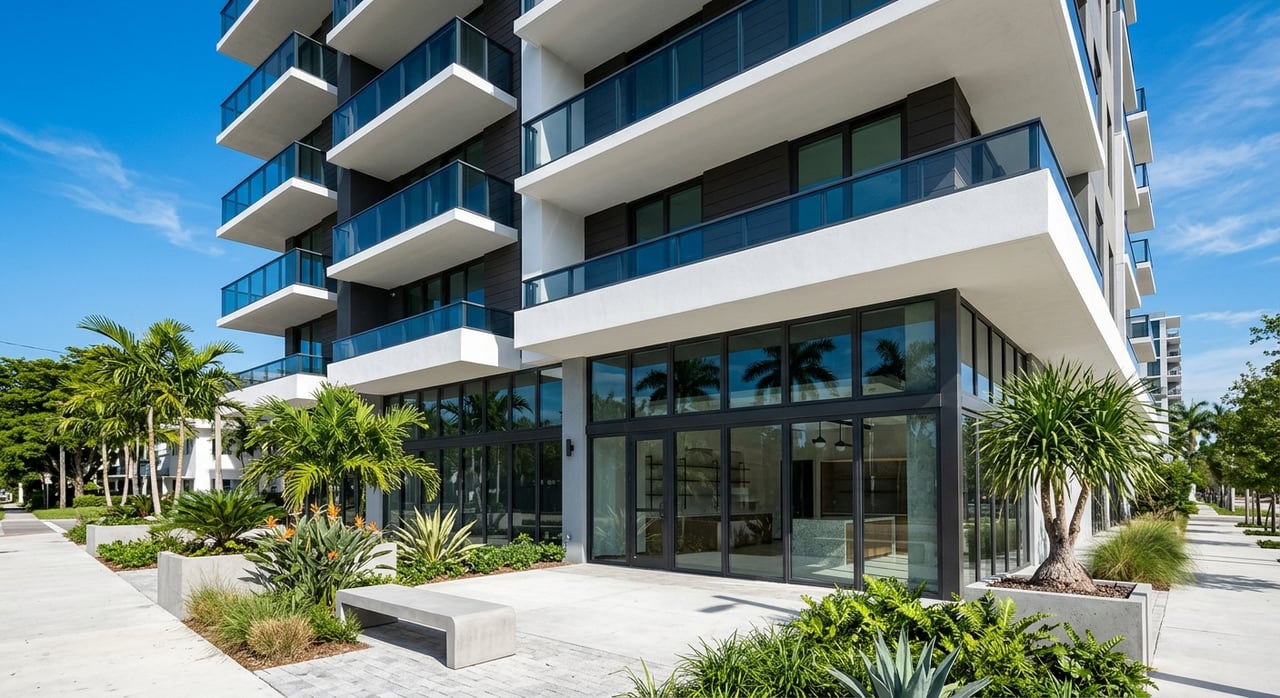
South Tampa does not behave like a single retail market. It works more like a network of established neighborhoods, each with its own rhythm, streetscape, and daily routines. If you are trying to understand why certain retail formats fit here and others struggle, the answer starts with how people actually move through South Tampa. Let’s dive in.
South Tampa runs on neighborhood patterns
South Tampa includes distinct communities such as Historic Hyde Park, Palma Ceia, Davis Islands, Ballast Point, Beach Park, Bayshore Gardens, and Palma Ceia Pines. City neighborhood descriptions point to a consistent pattern across these areas: established homes, shaded streets, parks, waterfront access, and local clusters of shops and services.
That matters because retail demand here is tied to repeated local use. People are not only making destination trips. They are also stopping for coffee, picking up a meal, visiting a service business, or meeting friends as part of everyday neighborhood life.
Palma Ceia Pines offers a clear example of this local pattern. The city describes it as a compact neighborhood with about 1,250 single-family and multi-family households, plus businesses, schools, churches, and nonprofits within its boundaries. In a place like that, nearby retail can benefit from short, frequent trips throughout the day.
Bayshore shapes daily customer flow
Few corridors influence South Tampa’s retail story more than Bayshore Boulevard. The city describes Bayshore as a signature multi-use boulevard connecting South Tampa to downtown, with the Bayshore Linear Park Trail stretching from Platt Street to Gandy.
That trail infrastructure helps create steady movement, not just weekend activity. The corridor includes a three-mile bike lane segment, benches, water fountains, bicycle parking, a marina, and fitness stations. The city also notes 4.5 miles of continuous sidewalk along Bayshore, which supports walking, jogging, and other daily exercise routines.
For retail, that kind of infrastructure supports visibility and frequency. A business that fits a grab-and-go, wellness, or casual service pattern can benefit from regular pass-by traffic generated by exercise, commuting, and neighborhood errands.
Transit and streets support short trips
South Tampa’s retail demand is also shaped by how people move beyond Bayshore. The broader mobility picture includes premium transit planning between Westshore and Downtown, plus a trail extension concept that would create more than 12 miles of contiguous trails from Gandy to Ybor City.
Current HART service already reinforces neighborhood-scale movement. Route 19 connects downtown Tampa to South Tampa destinations including Hyde Park Village, HCA Florida South Tampa Hospital, Britton Plaza Transfer Center, Jan Platt Regional Library, and Port Tampa. HARTFlex also operates in South Tampa.
These connections matter because they keep commercial corridors in view during normal daily routines. When people are already moving between home, work, recreation, library visits, and hospital-related trips, retail that serves those routines has a stronger foundation.
The strongest demand is neighborhood-serving retail
The city’s planning work in Palma Ceia gives one of the clearest signals about what fits the market. The commercial district plan describes a mix of office, commercial, and religious uses that link local businesses to nearby neighborhoods. It specifically points to restaurants, coffee houses, bars, specialty shops, and clothing stores as part of the district’s retail mix.
Other South Tampa neighborhoods show similar patterns. Historic Hyde Park includes an upscale retail and service node in Old Hyde Park Village, while Davis Islands combines residential and retail uses with local shops, eateries, and community events.
Taken together, those examples support a practical conclusion: South Tampa tends to favor smaller-format retail that can serve nearby residents often. This is less about big-box destination retail and more about businesses that fit into daily life.
What residents say they want
Community input from the Bay-to-Bay survey adds another layer. In that survey, residents most often selected restaurants, farmers markets, brewery or bar concepts, bakeries, coffee shops, produce stands or markets, and locally branded goods. Boutique shops and bookstores also drew interest, while grocery and salon-type uses appeared at lower levels.
This is not the same as sales data, so it should be read carefully. Still, it is useful directional evidence because it points to the types of retail people say they want close to home.
The pattern is consistent. Residents appear to prefer places they can visit often and easily, especially food, beverage, market-style, and specialty retail concepts that fit quick stops and repeat visits.
Lifestyle explains the retail mix
South Tampa’s lifestyle gives this demand pattern context. In Ballast Point, the city highlights waterwalks and quick access to Bayshore for jogging, walking, and rollerblading. In Bayshore Gardens, it points to front porch gatherings and Fred Ball Park as neighborhood anchors. In Davis Islands, it notes the mix of residential life, local retail, parks, and water views.
Those details help explain why neighborhood retail performs differently here than in a purely commuter-oriented corridor. South Tampa has social and recreational routines built into the physical form of its neighborhoods. People are outside, moving around locally, and often combining errands with leisure time.
That makes certain categories easier to understand. Coffee shops, bakeries, casual dining, specialty food, and boutique retail all match a lifestyle built around short trips, social stops, and recurring neighborhood activity.
Why fitness and daily-needs concepts fit
Public infrastructure also supports exercise-oriented businesses. Bayshore’s trail system, fitness stations, and long continuous sidewalk help create a strong wellness backdrop. For that reason, boutique fitness and adjacent service concepts have a logical fit in parts of South Tampa where visibility and access line up.
Daily-needs retail also makes sense in this setting. Survey interest in produce stands, markets, grocery, coffee, and bakery uses points toward convenience-driven formats rather than large destination stores.
Professional services can fit this pattern too. The district plan for Palma Ceia includes office uses, and Route 19 connects key everyday destinations such as the hospital and library. In practical terms, that means South Tampa can support a mix of retail and service tenants tied to recurring local demand.
Access can matter more than prestige
A well-known address helps, but access quality may matter just as much in South Tampa. City projects in and around the area include a new traffic signal at Bayshore and Swann with marked crosswalks and ADA ramps, MacDill Avenue mobility improvements, resurfacing on South MacDill from Gandy to Bay to Bay with pedestrian-accessibility work, and the Bay-to-Bay complete streets project.
These investments support safer and smoother movement for drivers, pedestrians, and cyclists. They also reflect what residents have said in public comments, especially along Bay to Bay, where people described the corridor as a heavily used east-west commuter street and emphasized the need for safer crossings.
For retail users, that has real implications. A site with strong visibility but weak pedestrian access may not perform as well as a location that is easier to enter, cross, and use as part of a normal daily route.
What this means for site selection
If you are evaluating South Tampa retail space, it helps to think in terms of overlapping routines. A good site can capture traffic from exercise on Bayshore, coffee or meal stops in Palma Ceia and Hyde Park, social activity on Davis Islands and Ballast Point, and regular service trips connected to Route 19 destinations.
That is why small-format, neighborhood-serving retail has such a clear fit here. The strongest opportunities often come from being woven into local life rather than trying to pull customers from far away.
In practical terms, focus on factors like:
- Walkability and crossing safety near the site
- Visibility to neighborhood and commuter traffic
- Access from established residential clusters
- Fit with frequent-visit uses such as food, beverage, service, wellness, or specialty retail
- Proximity to corridors shaped by parks, trails, transit, and daily errands
South Tampa retail demand is routine-driven
The most defensible way to understand South Tampa is simple. Retail demand here is powered by routine. It comes from the repeated patterns of neighborhood living, outdoor activity, short local trips, and mixed residential-commercial settings.
That is why the market consistently points back to small-format, neighborhood-serving concepts. When a space aligns with how South Tampa residents already live and move, it has a much stronger chance to become part of their weekly, and even daily, habits.
If you are exploring retail acquisition, disposition, lease strategy, or site selection in South Tampa, working with a local advisor can help you match the real estate to the demand pattern. To talk through opportunities with a data-driven, neighborhood-level approach, connect with Alan J. Kronenberg.
FAQs
Why does South Tampa support so much small-format retail?
- South Tampa’s neighborhoods generate frequent short trips tied to daily routines like exercise, meals, errands, and social time, which tends to support smaller neighborhood-serving businesses.
What types of retail concepts fit South Tampa best?
- Based on city planning materials and community survey input, restaurants, coffee shops, bakeries, farmers markets, produce-oriented concepts, bars, specialty shops, and other frequent-visit uses appear to have the clearest fit.
How does Bayshore Boulevard affect South Tampa retail demand?
- Bayshore creates steady movement through walking, biking, and recreation, which increases visibility for nearby businesses and supports concepts tied to convenience, wellness, and casual visits.
Why is access important for South Tampa retail sites?
- City investments in crosswalks, ADA ramps, resurfacing, and complete streets show that easy movement and safer crossings can be critical to how often people use a retail corridor.
What should investors and business owners evaluate in South Tampa?
- You should look closely at neighborhood proximity, daily traffic patterns, walkability, transit connections, pedestrian access, and whether the site fits a repeat-visit retail or service use.