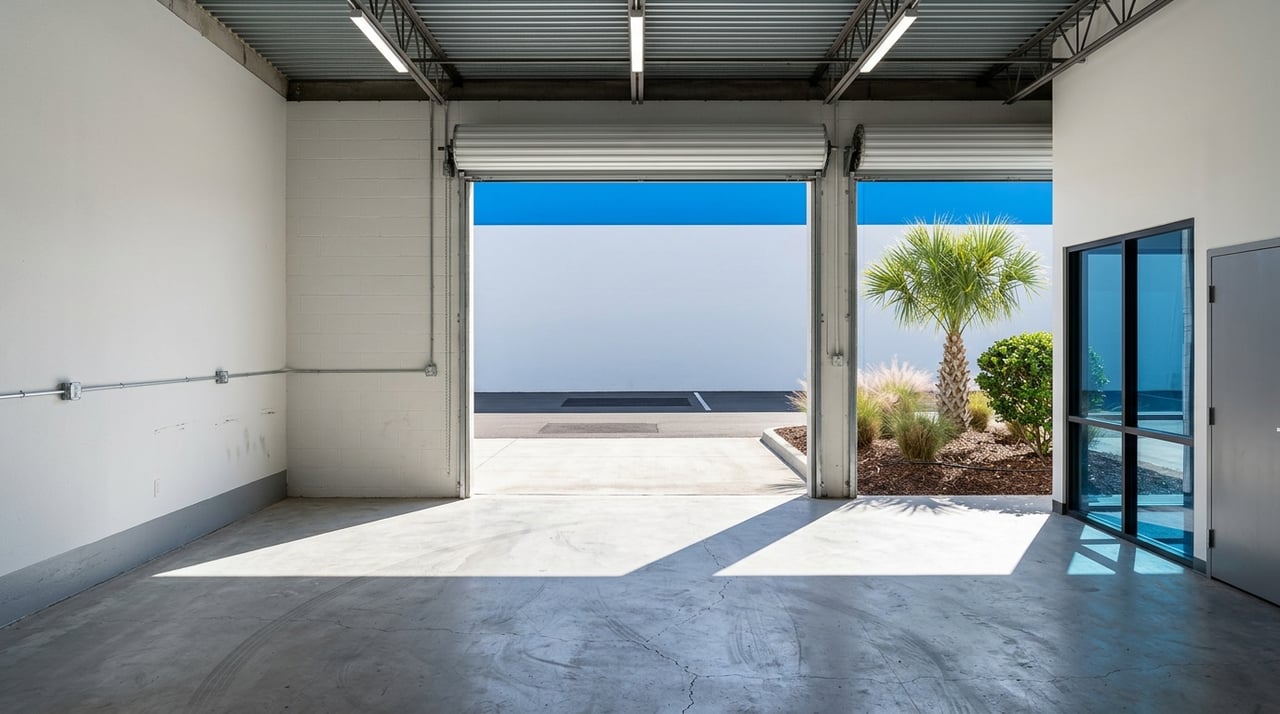
If you are hunting for value-add industrial real estate in Tampa, East Tampa deserves a serious look. This is not a far-out warehouse market where price alone drives the story. It is a central infill area where access, utility, and repositioning potential often matter more than cheap land, and that creates a very specific playbook for investors. Let’s dive in.
Why East Tampa stands out
East Tampa sits within the City of Tampa’s East Tampa Community Redevelopment Area, generally between Hillsborough Avenue and I-4, just east of I-275. The city positions the area between Downtown Tampa, the Port of Tampa, and USF, with access to three interstates and Tampa International Airport.
That location matters because it gives industrial and flex users fast connections to the urban core and the broader region. For many tenants, East Tampa is less about massive distribution footprints and more about staying close to customers, labor, suppliers, and transportation routes.
The CRA also has a stated focus on redevelopment of unused or underutilized commercial and industrial sites. The city has noted continued private investment across the area and is updating its redevelopment plan for the next five to ten years, which signals ongoing public attention to reinvestment and infrastructure priorities.
East Tampa is an infill market
One of the biggest mistakes investors can make is underwriting East Tampa like a greenfield logistics corridor. It functions more like a central operating district, where older properties can still serve real tenant demand if they are improved and positioned correctly.
In brokerage reporting, the broader comparable geography is often grouped into the East Side industrial submarket. That submarket has historically been one of the largest concentrations of industrial inventory in the metro, which helps explain why buyers keep targeting the area for access, repositioning, and operational value.
This also means your upside often comes from better execution, not just better timing. If you can solve functional issues, tighten operations, and match the asset to the right user base, East Tampa can offer a strong value-add setup.
What the industrial stock looks like
East Tampa’s inventory is largely older, practical, and serviceable. Current listings show a mix of buildings from the 1960s through the 1990s, alongside a smaller number of renovated assets and a limited supply of newer Class A product.
That age profile is important. It creates room for improvement, but much of the stock still has current leasing utility, which is exactly what value-add investors want to see.
Examples in the market include:
- Older manufacturing and warehouse buildings with dock-high and grade-level loading
- Flex properties with lower clear heights around 13 feet
- Renovated industrial buildings with improved functionality
- Multitenant dock-high flex assets
- Newer infill deliveries with modern specs like 32-foot clear height and multiple dock doors
In plain terms, East Tampa is not dominated by obsolete product. Most of the investable universe appears to be small-bay flex, light distribution, and warehouse space that can often be upgraded and re-tenanted rather than torn down and replaced.
Size and rent ranges to know
The active listing pool shows a wide range of suite sizes. You can find smaller flex suites around 1,600 to 4,830 square feet, garden-style flex blocks from roughly 2,679 to 33,497 square feet, industrial park space from 3,750 to 50,000 square feet, and warehouse blocks with outdoor storage from about 6,789 to 27,435 square feet.
There is also some newer Class A mid-bay product in the roughly 18,720 to 42,732 square foot range. That range matters because it gives investors multiple ways to enter the market, from smaller entrepreneurial deals to more scaled infill plays.
Current asking rents across listings run from about $7.50 per square foot for a large warehouse to $25.62 per square foot for smaller flex suites. Many mid-size options appear to fall in the low-to-mid teens, which reflects the market’s mix of older functional stock and newer infill space.
Clear height shapes your tenant strategy
In East Tampa, clear height is not just a spec sheet detail. It often tells you what kind of tenant demand an asset can realistically capture.
Current examples in the market range from about 13 feet in older flex properties to 18 to 20 feet in older warehouse and flex assets, around 25 feet in some renovated buildings, and 32 feet in newer deliveries. That spread creates very different leasing paths.
A lower-clear small-bay flex building may fit local service users, contractors, and light operational tenants better than fast-moving distribution users. A higher-clear mid-bay warehouse may offer more flexibility for inventory-heavy tenants that still want infill access.
How East Tampa compares with other options
For investors looking across the metro, East Tampa generally competes as a tighter, more central infill alternative. It is not the same bet as going east toward more land-rich areas.
A 2024 brokerage report showed the broader East Side submarket with 58.971 million square feet of inventory, 3.0 percent vacancy, and asking rent of $12.10 per square foot. In that same report, E Hillsborough/Plant City showed asking rent of $9.91 per square foot and vacancy of 8.6 percent.
That contrast is useful. East Tampa tends to offer stronger centrality and tighter infill positioning, while eastern submarkets may offer lower rent and more room for newer large-scale development.
By the first quarter of 2025, Matthews reported East Side asking rents at $12.80 per square foot triple net, up 64.3 percent over five years. The same report noted that East Side had delivered 1.8 million square feet in the prior year, with only about 200,000 square feet under construction, which suggests the market is working through a post-delivery adjustment phase.
What today’s market means for underwriting
The easy rent-growth window has cooled. Broader Tampa industrial reporting in late 2025 showed vacancy rising to a decade high as deliveries outpaced absorption.
For East Tampa buyers, that means you should probably underwrite more conservatively than you would have during the 2021 to 2023 surge. Longer lease-up periods, more tenant concessions, and a greater focus on move-in readiness are all reasonable assumptions in the current backdrop.
That does not weaken the East Tampa story. It simply shifts the advantage toward investors who are disciplined on basis, realistic on timing, and clear about the tenant profile they are targeting.
Why value-add fits East Tampa
The City of Tampa’s strategic action plan identified limited parcels that can support industrial development at critical mass. It also pointed to parcel fragmentation and underutilized corridors as barriers to larger-scale development.
That matters because it reinforces a core truth about East Tampa. In many cases, the best opportunity is not ground-up expansion. It is buying a functional but dated property and improving how the site works.
The same city planning framework identified an opening for standalone industrial buildings in the 30,000 to 40,000 square foot range on smaller infill sites along the western fringes of the CRA. That supports the idea that right-sized infill product can be highly relevant here.
Where investors may find upside
In a market like East Tampa, upside often comes from utility. Investors should pay attention to properties where operational improvements can unlock better leasing velocity, stronger tenant retention, or improved rent positioning.
Potential value-add targets may include:
- Older warehouse sites with excess land
- Underused industrial parcels
- Flex assets with outdated office build-outs
- Buildings with partially improved yards
- Properties that may legally support outdoor storage or fleet parking
- Larger spaces that could be demised into smaller suites
One marketed industrial outdoor storage property in the broader East Side submarket stated that the area continues to face a shortage of IOS sites. That suggests yard-capable properties may deserve extra attention when you are screening opportunities.
Common improvement scopes in this submarket
Most East Tampa value-add work appears to be functional rather than cosmetic. Because much of the stock is older, the goal is often to improve usability, not create a luxury finish.
Typical improvements may include:
- Roof repairs or replacement
- Paving and site drainage work
- LED lighting upgrades
- Dock and grade-door repairs
- Office refreshes
- Parking lot re-striping
- Yard fencing
- Updated signage
- Code-related cleanup
- Environmental cleanup where needed
These are the types of changes that can reduce friction for tenants and help a property compete more effectively. In a central infill market, convenience and utility can matter as much as appearance.
Lease-up strategy should match the asset
A smart East Tampa lease-up plan starts with the product itself. Not every building should chase the same tenant.
For smaller-bay and flex product, demand may come from contractors, service firms, local distributors, and light manufacturers that need quick access to the urban core. These users often care about location efficiency, loading access, and a practical layout more than top-tier warehouse specs.
For mid-bay buildings, a phased occupancy strategy may make sense. Short-to-medium lease terms, focused tenant improvements, and a clear move-in timeline can help reduce downtime and widen the prospect pool.
For larger infill blocks, scarcity and replacement cost become more important. In many cases, the central location itself is part of the value proposition, especially when modern alternatives nearby are limited.
A simple East Tampa investor checklist
Before you move on an East Tampa industrial or flex opportunity, it helps to pressure-test the basics.
- Is the property functional today, or does it need major correction?
- Does the clear height support your likely tenant base?
- Is there yard area, excess land, or outdoor storage potential?
- Can a larger space be demised into smaller suites?
- How much capital will basic utility upgrades require?
- Are you underwriting slower lease-up and realistic concessions?
- Does the central infill location justify your basis versus more eastern alternatives?
If you can answer those questions clearly, you will be in a much better position to separate a true value-add opportunity from a value trap.
The bottom line on East Tampa
East Tampa is best understood as a central, operational infill industrial market. Its appeal comes from access, functionality, and redevelopment potential, not from being the cheapest place to buy warehouse product in the metro.
For value-add investors, that creates a focused opportunity set. The strongest deals are often functional but dated assets where you can improve utility, tighten leasing strategy, and serve tenants that value speed to market, yard capability, and close-in location.
If you are evaluating East Tampa industrial or flex opportunities and want a more disciplined read on pricing, positioning, lease-up, or acquisition strategy, Alan J. Kronenberg can help you assess the market with a local, investor-focused lens.
FAQs
What makes East Tampa different from other Tampa industrial areas?
- East Tampa is a more central infill market, so investors often focus on access, repositioning potential, and functional utility rather than cheap land or large greenfield development.
What types of industrial properties are common in East Tampa?
- The market includes older warehouses, small-bay flex buildings, light distribution space, multitenant industrial product, and a limited amount of newer Class A infill inventory.
What rent levels are investors seeing in East Tampa industrial listings?
- Current listings range from about $7.50 per square foot for some larger warehouse space to $25.62 per square foot for smaller flex suites, with many mid-size options in the low-to-mid teens.
What clear heights are typical in East Tampa industrial buildings?
- Active examples range from about 13 feet in older flex properties to 18 to 20 feet in many older warehouse assets, with some renovated or newer buildings reaching 25 to 32 feet.
What is a practical value-add strategy for East Tampa industrial real estate?
- A practical strategy is often to buy a functional but dated asset, improve the site and building utility, and target tenants that value central location, loading access, yard space, and quick occupancy.
What should investors watch for in East Tampa lease-up planning?
- Investors should plan for more conservative lease-up assumptions, possible concessions, and a tenant strategy that matches the building’s clear height, loading, suite size, and yard configuration.